Managing drought, culling before winter, fall seeding, and upcoming events
Sep 16, 2024
In this Timely Tips
Here in South Central Kentucky, unlike much of the area, we are getting adequate rain. But from all the consulting phone calls I'm receiving, a lot of places are pretty dry now, so I'll touch on drought management too. Adequate rain means that along with the grass growth, the weeds and forbs are growing well, too. In this newsletter, I'll cover some things to consider this time of year.
My Pasture Walk
Managing grass in dry times
Stockpiling grass for fall and winter
Pastureland Soil Health
Managing water for livestock
Consider seeding cool-season forages
Culling livestock
MY PASTURE WALK
This year, we'll hold my pasture walk in association with the "Heart of America Grazing Conference." Visit my website for more information about the event. We plan to cover the natural regeneration of native grasses, drilling annuals, drilled grazing, pastureland soil health, silvopasture, and multi-species grazing. Click here to read more about the conference and reserve your spot at the pasture walk.
MANAGING GRASS IN DRY TIMES
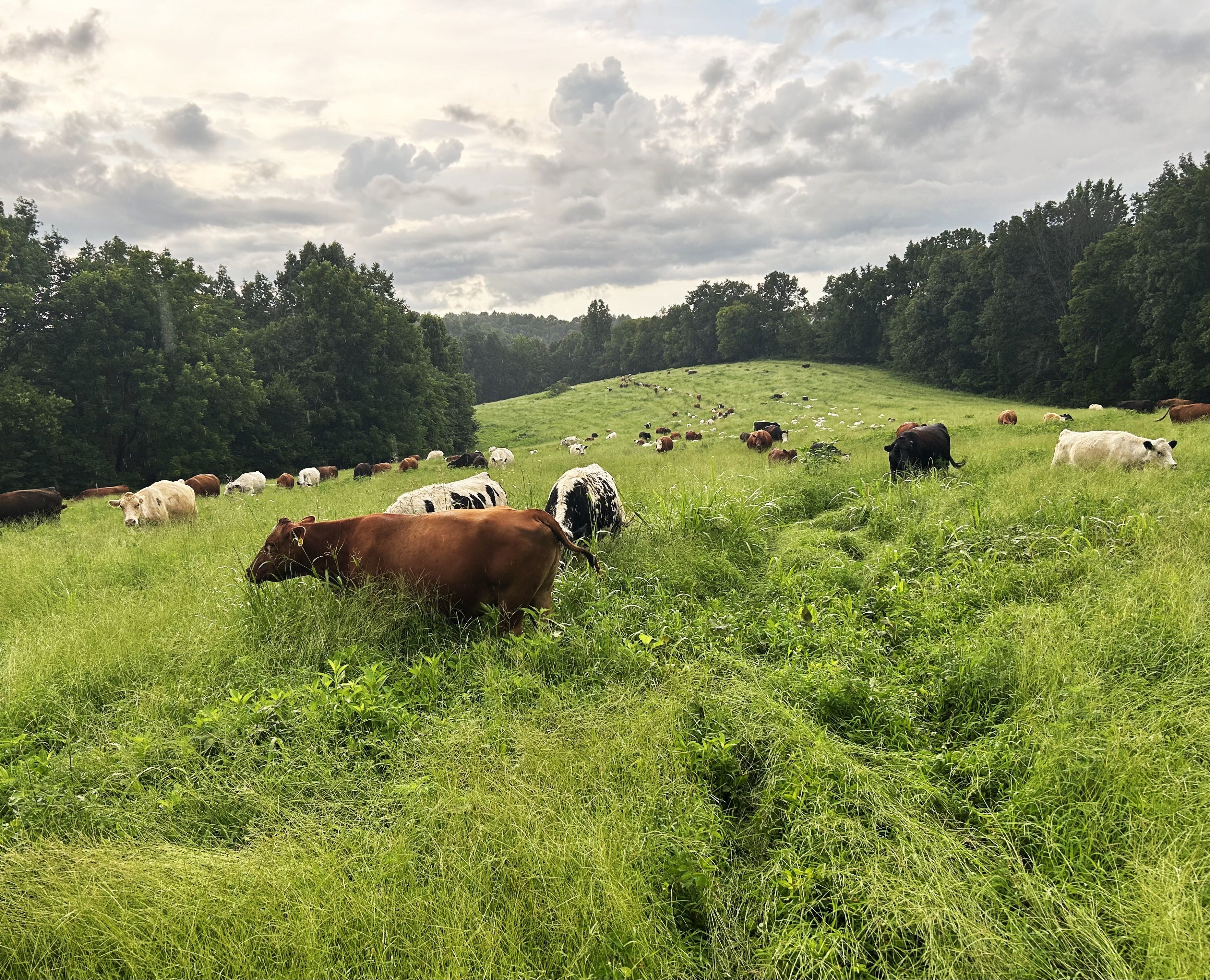
In dry times, it's essential to understand the importance of conserving the grass you have. Don't mow the grass until after you have grazed it. You'll need to manage residual height so that when growing conditions return, the grass will regrow fast.
A good average residual height to maintain is 4 inches. Anything below that will cause the soil to bake, your roots will die off, and once the rain returns, they'll struggle to regrow.
Confine your livestock to weedy or low-fertility fields and feed hay. After the pasture rotation starts again, you'll likely want to reseed the sacrifice area.
Hopefully, you have been rotating pastures and have some excess forage to graze during times of no or slow growth. Warm-season grass like bermudagrass can be stockpiled for winter even though it isn't great quality. You'll get some reasonable animal performance on dormant bermudagrass, which can be grazed lower than most forages and still have adequate regrowth. Johnsongrass is another forage that can be stockpiled for fall and early winter, but it can have cyanide after frost, so it's best to delay grazing it after 14 days or more after a frost. Warm-season grasses are best if grazed before the first of the year.
Many top graziers use the Top-Third grazing practice when pasture growth is good. Then, as growth slows, it's best to shift to the Take-Half/Leave Half practice. If it stays dry, graze grass to the recommended minimum height to graze. The recommended minimum grazing height for johnsongrass is 6", tall fescue is 3", and bermudagrass is 2", but if you don't know your grasses, just remember 4" and use it as a guide.
An example of this adaptive grazing technique would be if you turn into a field of tall fescue at 9" tall, graze down to 6", and leave the field and close the gate. When it regrows to 8" turn them in and graze to 4". Recovery time between grazing is largely dependent on how low the field was grazed. The minimum recommended recovery time is between 21 and 90 days in the growing season. In the fall, the grass can be stockpiled for up to 210 days.
This is a good time to use odd areas that aren't typically grazed, such as hay fields, farmsteads, riparian areas (flash graze), and wooded areas that aren't high-quality timber areas (realize livestock will eat young regenerating trees). Grab your polywire and good line posts and make use of these areas. This can be a low-cost way to find some extra pasture.
PASTURELAND SOIL HEALTH
Good soil health is the key to drought resiliency. Healthy pastureland soil is largely dependent on cover, minimizing disturbance, which is grazing, and plant diversity, a mix of grasses, legumes, and forbs. Live roots are very important for soil health all year. Roots are not only a mirror of the top growth. Plants produce secretions from roots called exudates. These secretions influence the rhizosphere around the roots to inhibit harmful microbes and promote the growth of the plant and nearby plants. Healthy soil allows the plants to feed themselves and their neighbors.
So, how do we improve soil health in pastures? We maintain residual height above 4", keep residue on the soil, and manage so the cattle consume about a third of grass, stomp a third, and leave a third standing. Pastureland with good cover not only conserves more moisture but is also 10-30 degrees cooler. These cooler temperatures improve habitat for soil life and moisture availability, reducing large swings in temperatures.
STOCKPILING GRASS FOR FALL AND WINTER
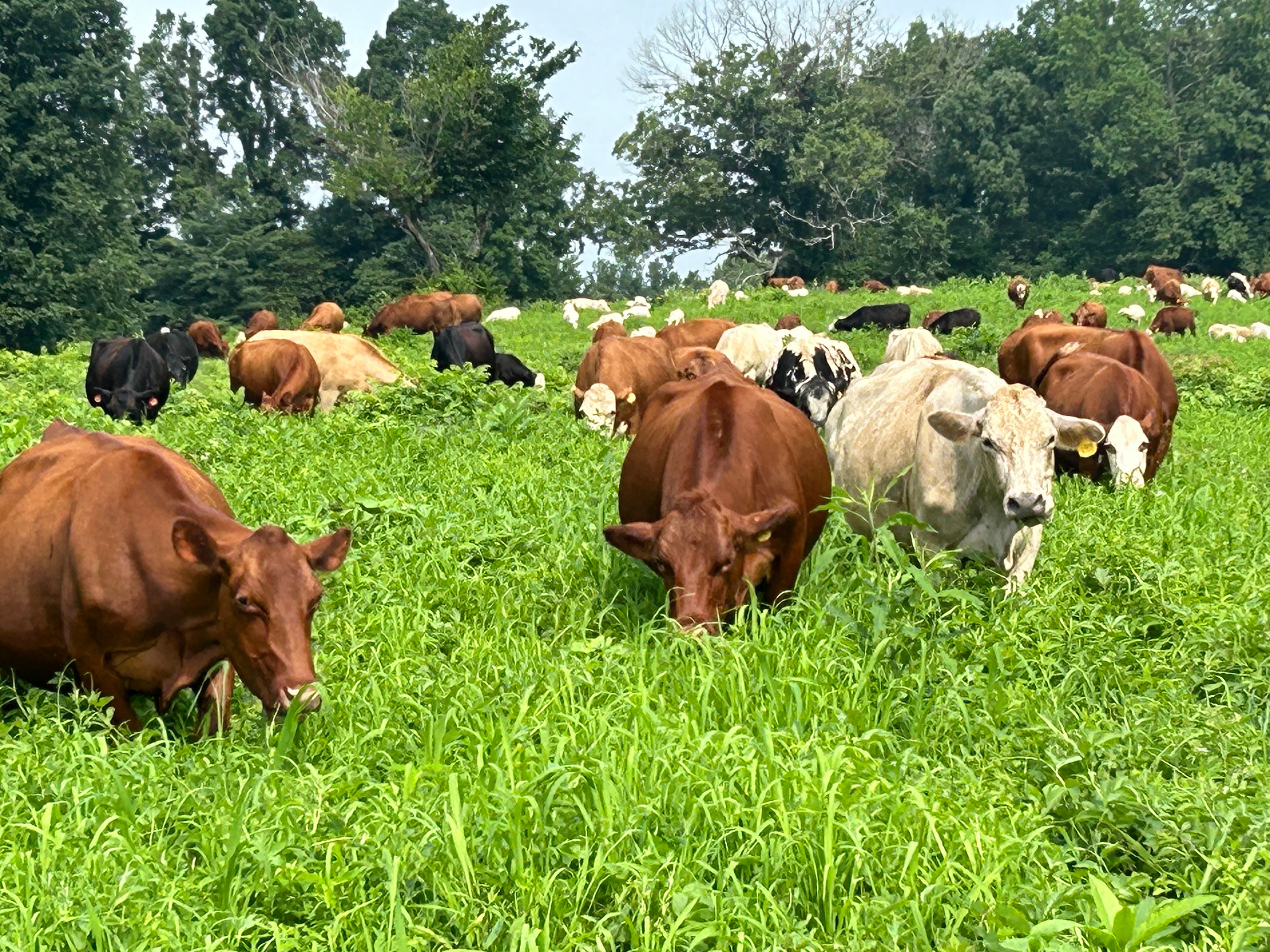
As you graze fields this time of year, clip weeds after grazing to optimize quality grass and control weeds from shading desirable grass. When temperatures are in the 70s, and you're lucky enough to have moisture, grass growth turns on. Weed-free, cool-season grass fields like tall fescue are the best to reserve for late fall and winter grazing.
September 15 (or one month before the normal killing frost) is the most important time to clip pastures and return forage to a vegetative state before stockpiling grass for winter. Only mow fields that need a reset; don't mow down good grass; it may not rain, and any standing grass is better than none. Graze more mature grass first while allowing more vegetative grass to grow. Short-duration, high-density grazing reduces mowing, but sometimes there are old stools of grass with brown leaves shading green leaves or plants like wingstem, cocklebur, and ironweed, shading desirable grass that needs light to grow and last longer for stockpiling grass.
Feeding hay when you can grow grass is one option. See last year's August Timely Tips (gregbrann.com) for more on feeding hay in the fall. The times to feed hay are when 80% of fields are at minimum height (3" for cool season grass) or when you want to grow more grass and temperatures are below 80F with available moisture. If you apply nutrients and need fall growth, apply now, but spring applications work better on hay ground. Moisture needs to be available to activate the soil biology and the nutrients.
CONSIDER SEEDING COOL SEASON FORAGES
If your stand of desirable grass is less than 50%, it's time to consider reseeding. In this case, you have three primary options: 1) do nothing but manage the existing stand, hoping for natural regeneration (this can be a slow process), 2) seed cool-season annuals, or 3) seed perennial grass like tall fescue or orchardgrass.
The natural regenerative method will be to decide if the land needs disturbance/grazing or a longer recovery.
Many times, there is plenty of grass present, but you just need to give it a longer recovery time, or soil nutrients are needed to help the grass compete with other vegetation. An example would be a tall fescue plant with three or more tillers that could easily be managed to become a thicker stand.
Seeding cool season annuals is great for transitioning to perennials. Annuals provide higher quality forage and typically more forage than perennials for their period of growth, but they are rather expensive. A mix of about 100 pounds of small grain with 20 pounds of annual ryegrass, per acre, gives full cool season production. Getting the seed in early may get early winter grazing; if seeded later, you will likely get early spring grazing through June. Perennials are cheaper in the long run, but they're slower to establish, and it's best to delay grazing for six months or more. Don't mix annuals with perennials because the annuals can out-compete the perennials, reducing your stand of perennials.
CULLING LIVESTOCK
Now is the perfect time to cull livestock that are not performing well. Auction markets are high, and hay feeding can be expensive. It is always good to cull animals prior to fall growth and winter, but this year is an opportunity to cash in on low-performing animals. Pregnancy testing mature females with no bag can pay big dividends as the cost of carrying a cow per year is $600 or more, so it is worth getting rid of dead weight.
SUMMARY
Be Observant and remember that pastures are "turned on" by feeding the livestock below the ground.